

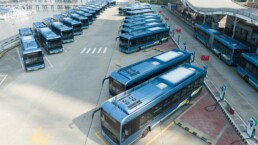


Fleet operations are inherently complex, requiring careful coordination across vehicle types, routes, depots, and schedules. Your electrification journey adds a new layer of planning to the process. In our last blog post, we discussed how to catalog the vehicles in your fleet to plan for electrification. Here, we will walk through how to optimize fleet operations early on by analyzing fleet schedules. Your operational data will allow you to identify the appropriate charging speed and time windows that your vehicle routes require. As a result, you’ll be able to determine which vehicles to electrify first.
Level-Setting: Understanding Your Current Fleet Operations
To set your fleet up for future success, it’s critical to establish a baseline understanding of how your vehicles are used today. This goes beyond knowing the make and model of each vehicle. It includes where vehicles are based, who they serve, and what mission they support.
Route length and variability play a major role in your vehicles’ energy use and viability for electrification. Some vehicles follow highly predictable routes every day, while others may operate on-demand and have more variability. Duty cycles also matter. Vehicles with shorter daily run times or buffer time between routes are often easier to electrify early, as these breaks provide a natural opportunity to top off a charge. Operational structure further influences decisions. While a school district, public transit agency, and municipal fleet may operate similar vehicles, their constraints around schedules, redundancy, and service reliability can be very different.
Without this level-setting, fleet operators risk making electrification decisions that look good on paper but fail in practice.
Which Vehicles to Electrify First?
Very few fleets electrify their entire operation at once. Most transitions happen in phases, making early vehicle selection especially important. Typically, vehicles that are strong early candidates for electrification have the following attributes:
- Shorter daily route lengths
- Predictable schedules
- Long overnight dwell times
- Operations that align well with existing or easily expandable charging infrastructure
Infrastructure readiness often becomes a gating factor. Even if a vehicle is a good operational fit, a depot may lack the space or electrical capacity to support charging without triggering a costly and time-consuming utility upgrade. It’s important to weigh operational benefits against potential electrical capacity constraints. If utility upgrades are a concern, initially spreading out charging across several sites or points of interconnection may be beneficial.
Aligning electrification with natural replacement cycles for older vehicles helps avoid stranded capital. And incentives may further influence timing—especially when programs include scrappage or retirement requirements tied to funding eligibility.
Route Analysis: Aligning Real-World Conditions with EV Performance
One of the most common misconceptions in fleet electrification is treating advertised vehicle range as a guaranteed operational outcome. In practice, range is highly dependent on operating conditions.
Key factors that affect EV range include:
- High-speed highway driving vs. stop-and-go city routes
- Elevation changes and terrain
- Temperature extremes, especially cold weather
- Auxiliary loads such as HVAC, lifts, or onboard equipment
Route analysis helps identify which routes pose the least risk of “range squeeze,” in which vehicles consistently operate near their maximum usable range. This analysis also guides electric vehicle selection and specification of details like battery capacity. Early electrification efforts should focus on routes with the greatest operational buffer to minimize risk and build confidence. These lower-risk deployments generate real-world performance data and create a foundation for tackling more challenging routes in later phases.
Designing Charging Schedules Around Fleet Operations

Charging strategy should be a direct extension of fleet operations, not a separate planning exercise. Understanding when vehicles return to the depot, how long they remain parked, and when they need to depart again is essential for right-sizing charging infrastructure.
Some fleets have long overnight dwell times that make managed depot charging straightforward. Others experience midday buffer time that can support opportunity charging between routes. In certain cases, limited on-route charging may help add miles during the day and reduce pressure on overnight charging windows. School buses and some delivery fleets may return to the depot multiple times a day, creating additional flexibility if charging is properly planned.
Charging schedules should also account for utility tariffs. Aligning charging with off-peak hours can significantly reduce operating costs as fleets scale.
How Much Charge Management Software Is Enough?
The key to managing charging schedules is charge management software. And as fleets grow, this software becomes increasingly valuable. These tools can:
- Automatically schedule charging based on departure times
- Prioritize certain vehicles for higher charging power
- Balance electrical loads to avoid demand spikes
- Adjust charging behavior in response to cold weather or operational changes
- Allow more chargers to be installed on an electrical service (i.e. oversubscription)
However, not every fleet needs advanced software on day one. The appropriate level of sophistication depends on:
- Fleet size
- Route variability
- Number and power level of chargers
- On-site electrical constraints
Smaller fleets or highly predictable routes may only require basic scheduling tools, while larger fleets and more complex operations often benefit from more advanced capabilities like load balancing, vehicle prioritization, and system integrations, such as building load monitoring or integration with on-site energy generation and storage (like solar or batteries).
ForeFront Power works with fleets to evaluate operational needs and recommend right-fit charge management solutions—ensuring fleets are prepared for growth without over-investing in unnecessary features.
Setting Up a Phased Plan: Connecting Operations to Infrastructure
Once fleet managers understand which vehicles will be electrified first and how those vehicles operate, infrastructure planning becomes far more precise. Charging schedules directly inform how many chargers are needed, what power levels make sense, and how sites should be laid out.
The most cost-effective approach is typically to build only the infrastructure required for the first phase, while designing the electrical service with future expansion in mind. This allows fleets to control upfront costs while avoiding rework as electrification scales. When operations drive infrastructure decisions, sites are more efficient, more flexible, and better positioned for long-term success.
Operational Planning is the Foundation of Electrification Success
Fleet operations are mission-critical, and electrification should strengthen—not disrupt—those operations. By grounding EV rollout strategies in real-world route analysis and thoughtfully designed charging schedules, fleets can reduce costs, minimize risk, and avoid unpleasant surprises.
Data-driven operational planning leads to smarter infrastructure decisions and smoother transitions to electric vehicles. In our next blog post, we’ll explore infrastructure and site planning, diving deeper into how electrical design, utility coordination, and physical layout turn operational insights into scalable charging solutions.
With the right charging schedule and operational strategy, electrifying your fleet doesn’t have to mean disruption or risk. By aligning routes, dwell times, and charging windows—and pairing them with smart software, onsite solar, and storage—you can cut fuel and maintenance costs, improve reliability, and stay ahead of upcoming regulations
If you have questions or could use support setting up your electric fleet operations for success, ForeFront Power is an expert in infrastructure planning, having helped public agencies and fleet operators nationwide make their EV transition with turnkey projects built around real-world constraints, not a one-size-fits-all template. Ready to explore how a tailored charging and fleet operations plan could work for your organization? Reach out to our team for complimentary assessment and take the next step in your electrification journey with confidence.




Interested in learning more?
We would love to discuss how our solutions might be a fit for your organization.
Complete this form to if you would like one of our experts to reach out to you:
Our Headquarters is located at:
ForeFront Power
255 California Street, Suite 900
San Francisco, CA 94111