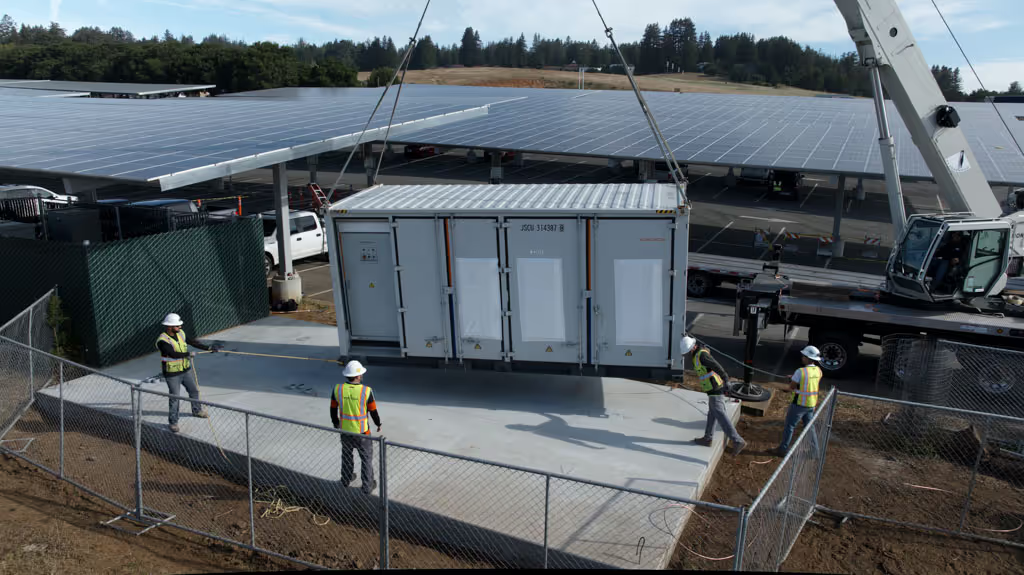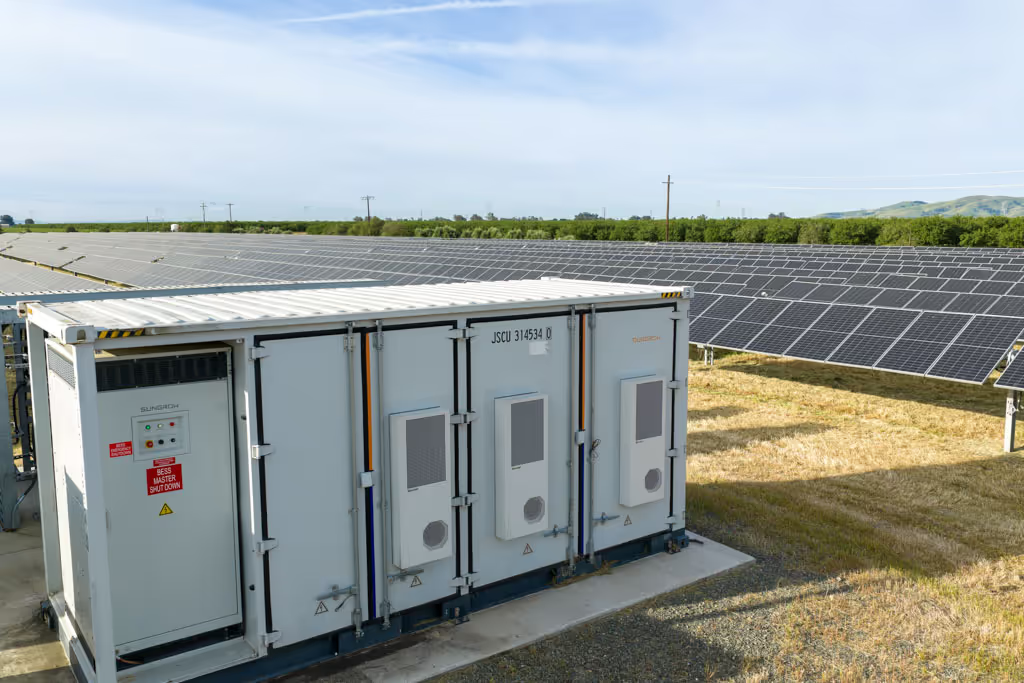

About Battery Storage
What can energy storage do for you?

Create more savings
Store power for use when utility prices are highest, reducing peak demand charges, which usually account for up to 50% of a commercial utility bill.

Add resiliency to your operations
Deploy battery-stored energy to keep operations running during grid outages. Many technologies stabilize voltage and frequency variations, protecting sensitive equipment.

Diversify your revenue streams
Transform grid events into financial opportunities. By enrolling your BESS in grid services and demand response programs, you can leverage your battery during peak demand events, earn performance‑based payments, and create new revenue streams without interrupting your core business.

Grow your business, even when grid-constrained
In capacity‑constrained areas, getting more power to your site can be slow, costly, or flat-out impossible—especially as competition for electricity increases from data centers, EV fleets, and other demanding energy uses. Batteries effectively expand your available power, allowing operations to scale while minimizing costly upgrades.

Run off cleaner energy
Peak grid electricity is often the most carbon‑intensive. By storing cleaner energy—such as solar—and using it during peak demand, batteries reduce emissions, limit generator use, and maximize the impact of renewables, helping you reach sustainability goals.

Reduce or replace your generator
Traditional diesel generators are costly to maintain, fuel, and operate—and often sit idle until an outage occurs. Battery storage provides a cleaner, quieter alternative that delivers instant power with lower emissions, zero fuel logistics, and less maintenance. In many cases, batteries can reduce or entirely replace the use of generators, lowering operating costs while improving reliability.
GO A STEP FURTHER
Amplify the impact of energy storage
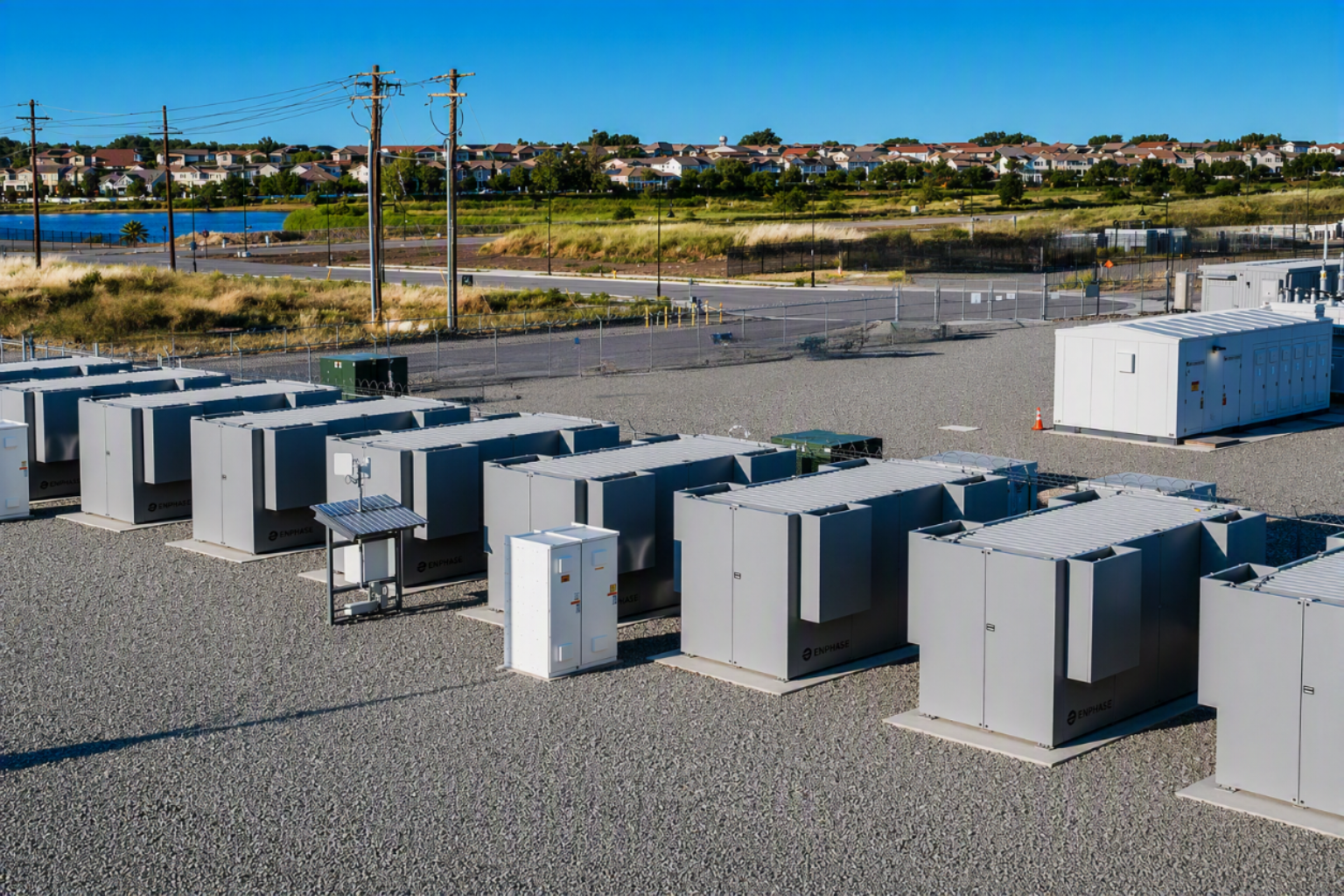
Energy storage adds resilience and flexibility to your energy strategy. There are many ways to integrate a BESS into your operations to save even more in operating costs.
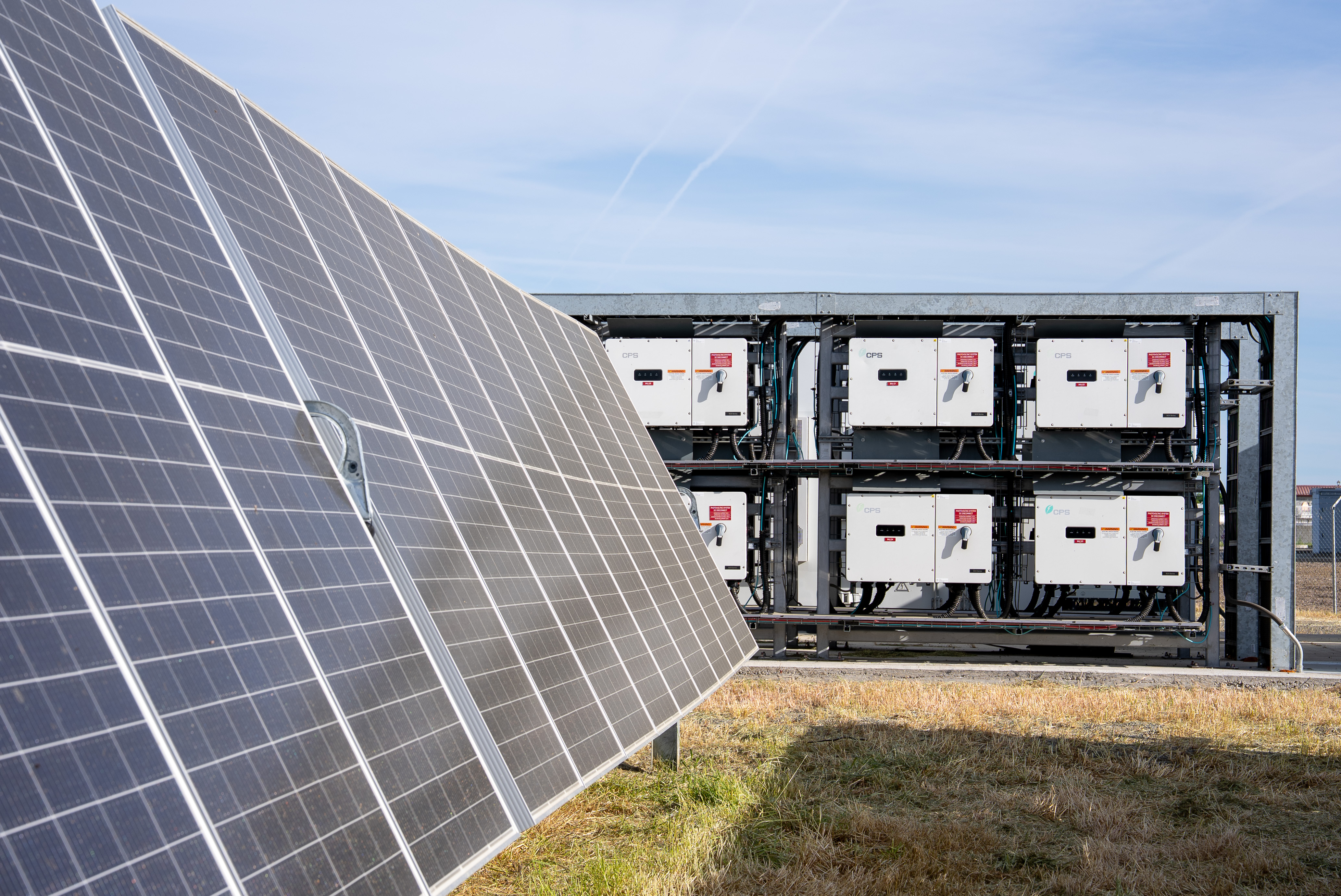
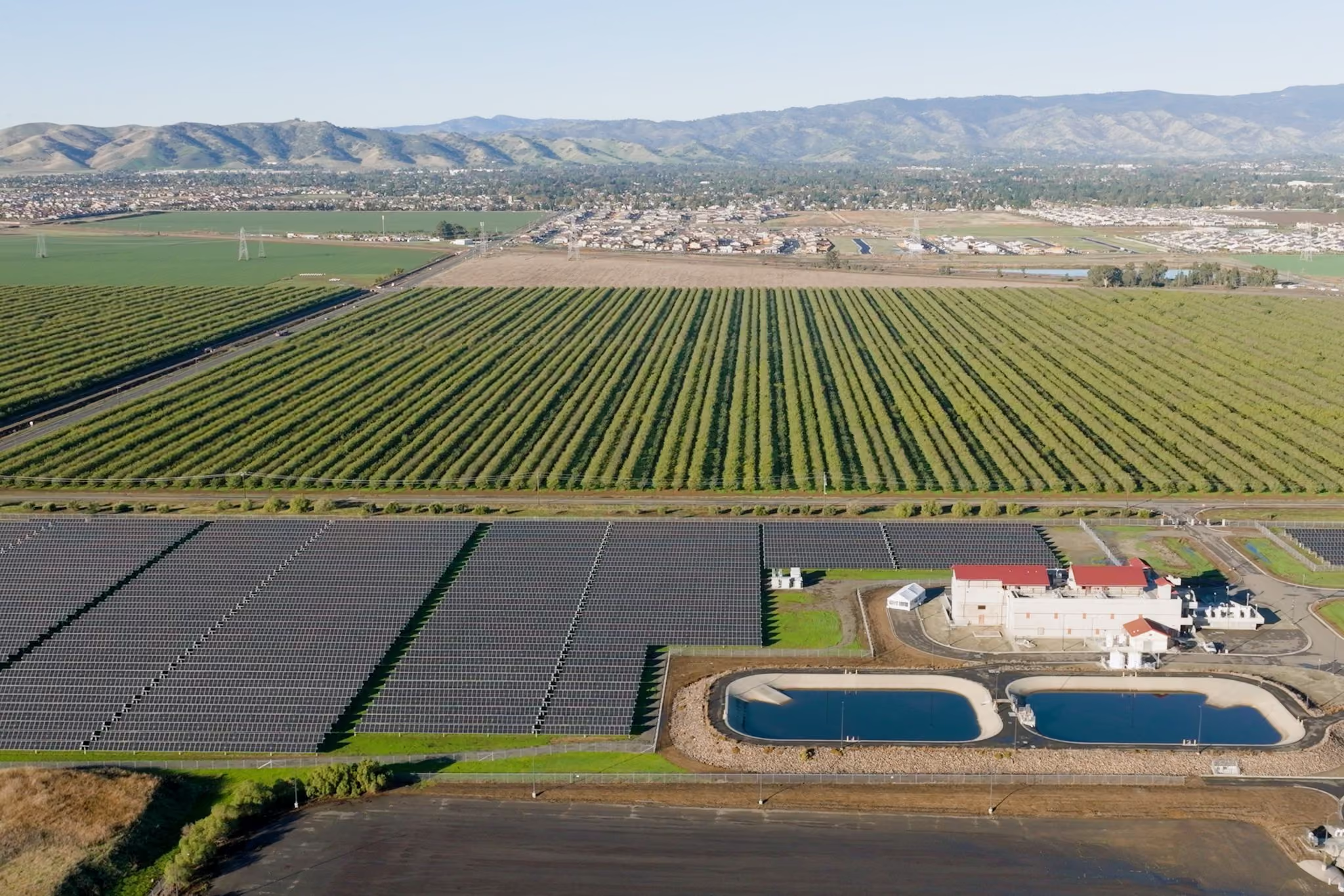
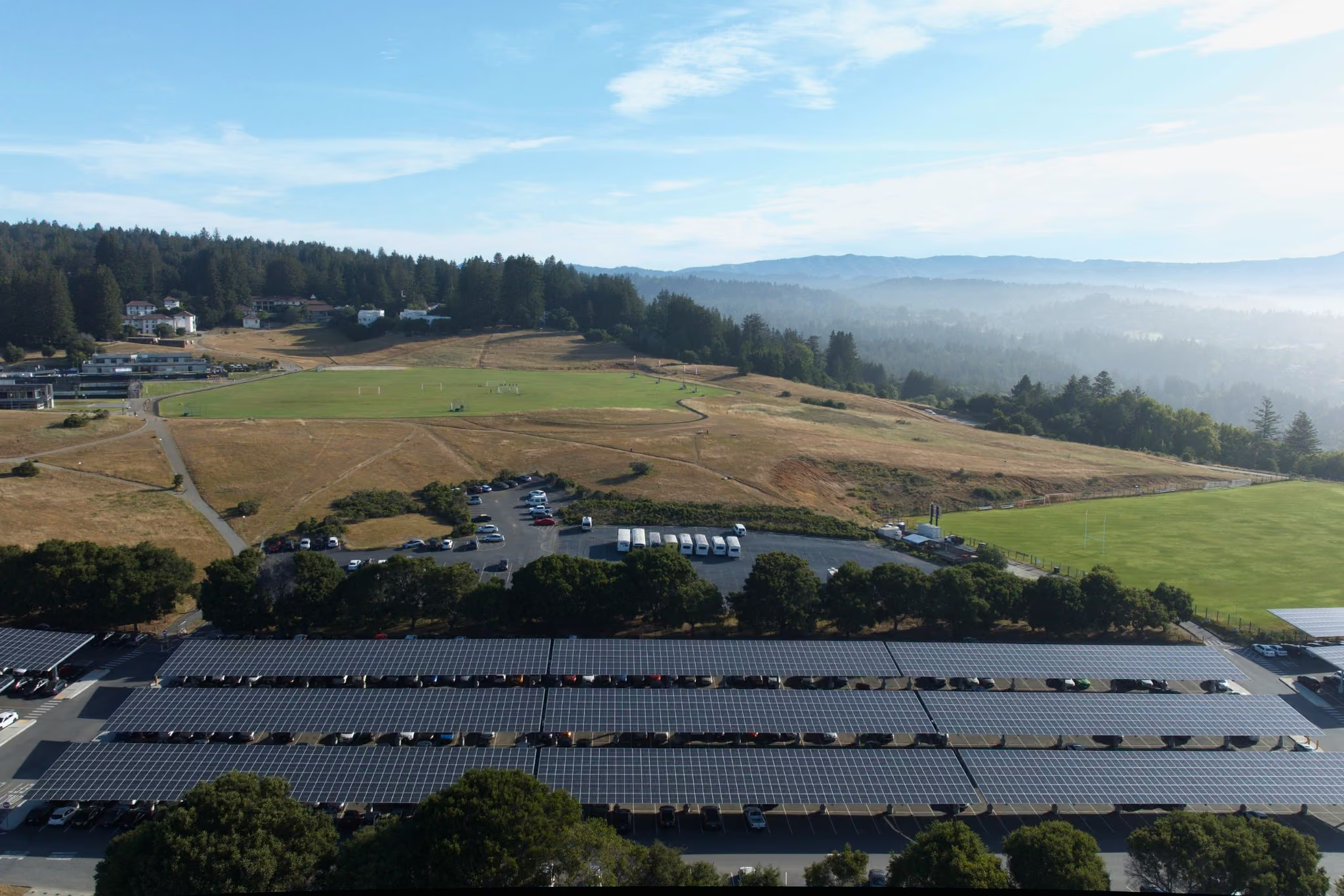
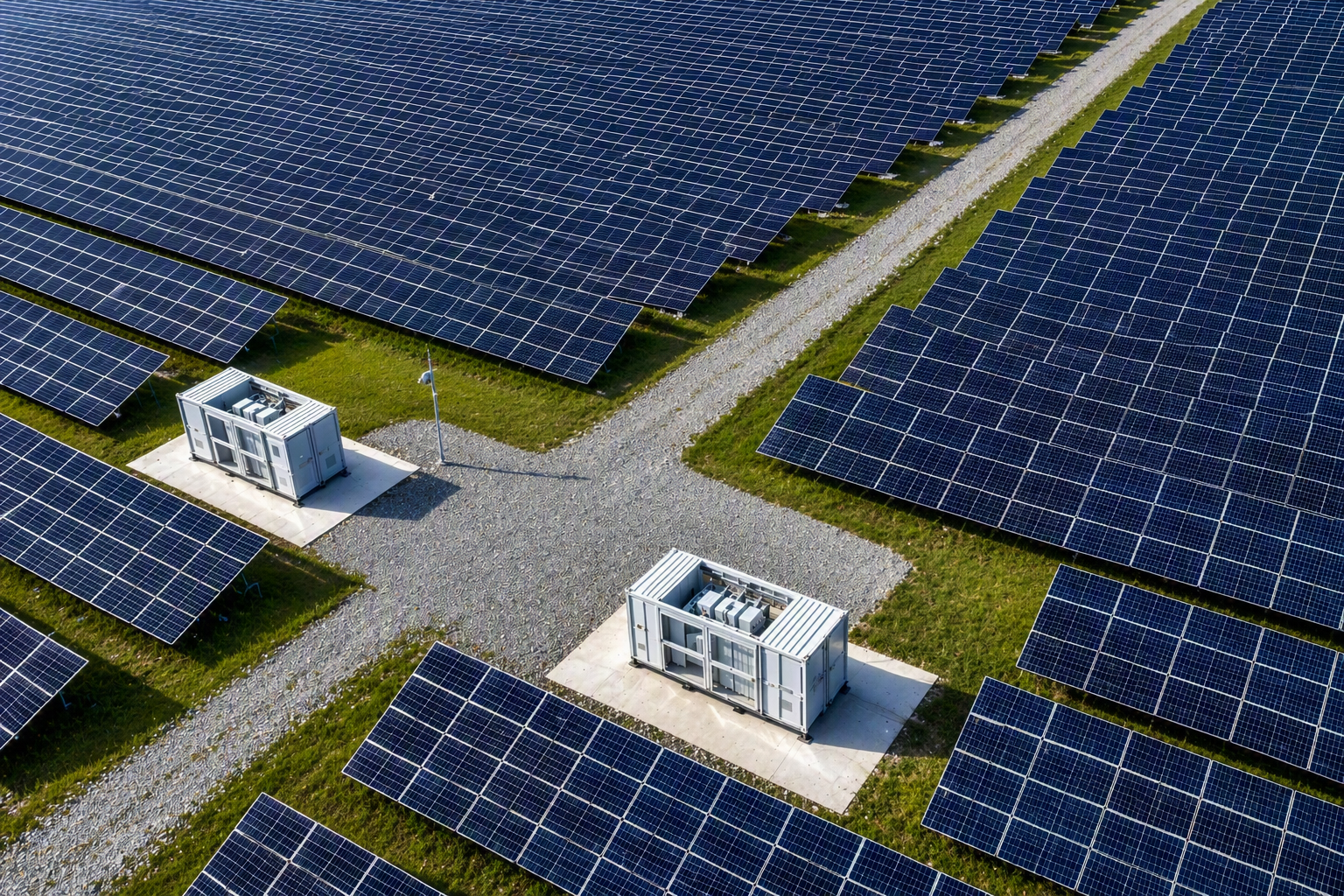
Pair with Solar
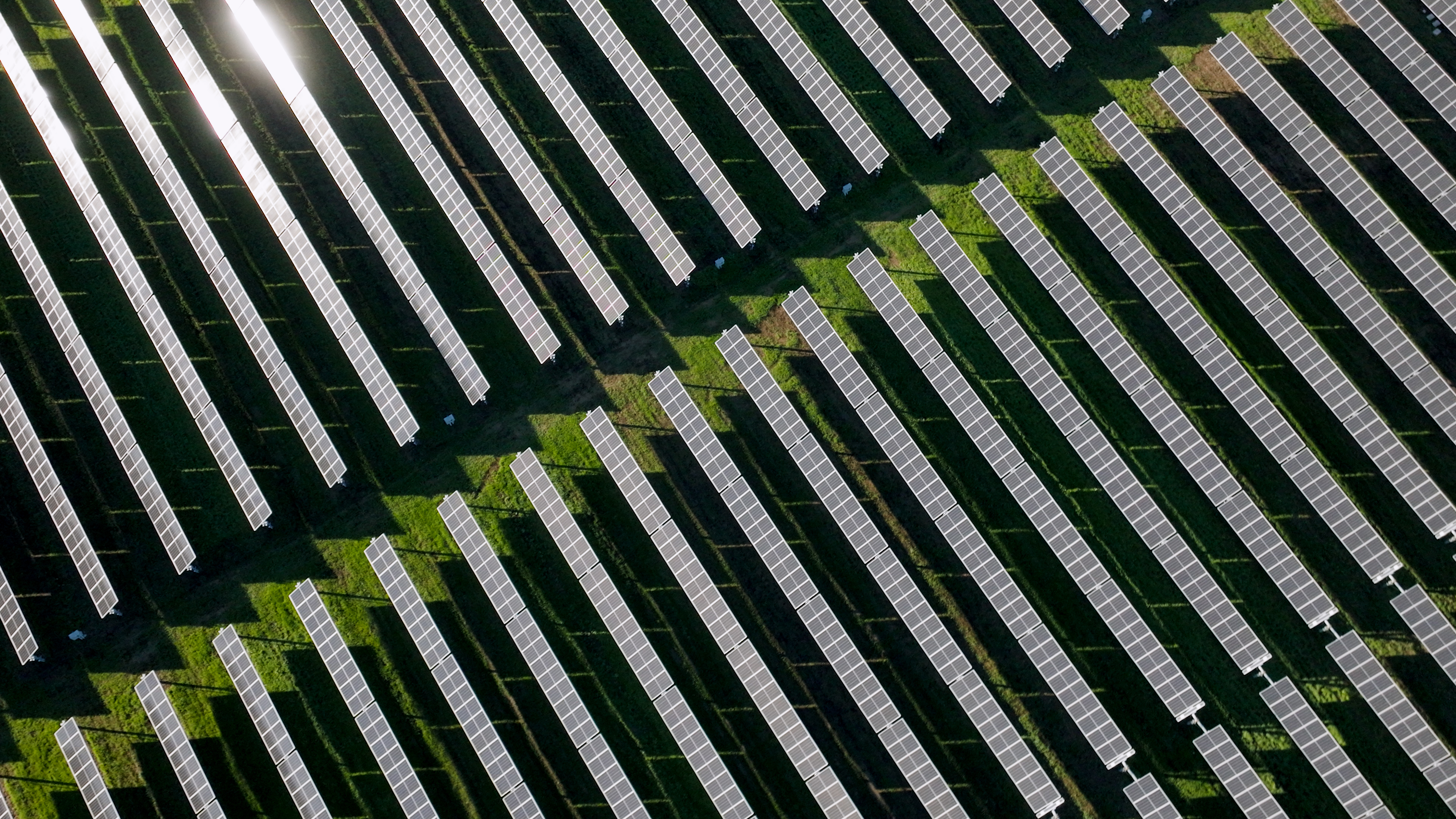
Power your battery with predictably priced solar energy. Discharge this cost-effective power when the sun goes down, or utility prices are high.

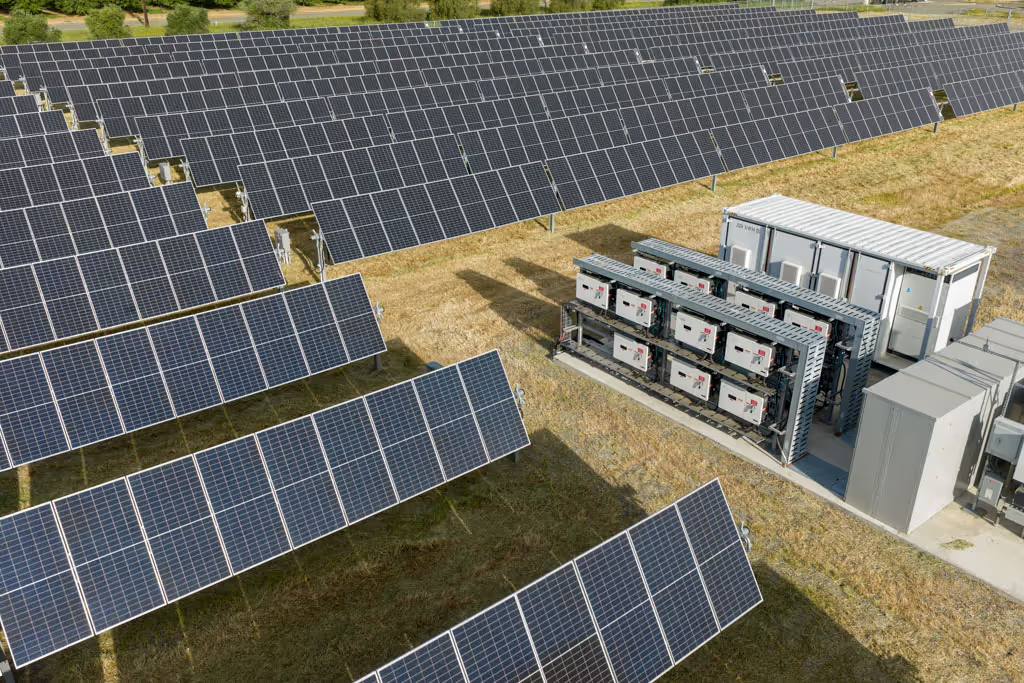
Pair with Solar
Power your battery with predictably priced solar energy. Discharge this cost-effective power when the sun goes down, or utility prices are high.
Pair with EV Charging Stations
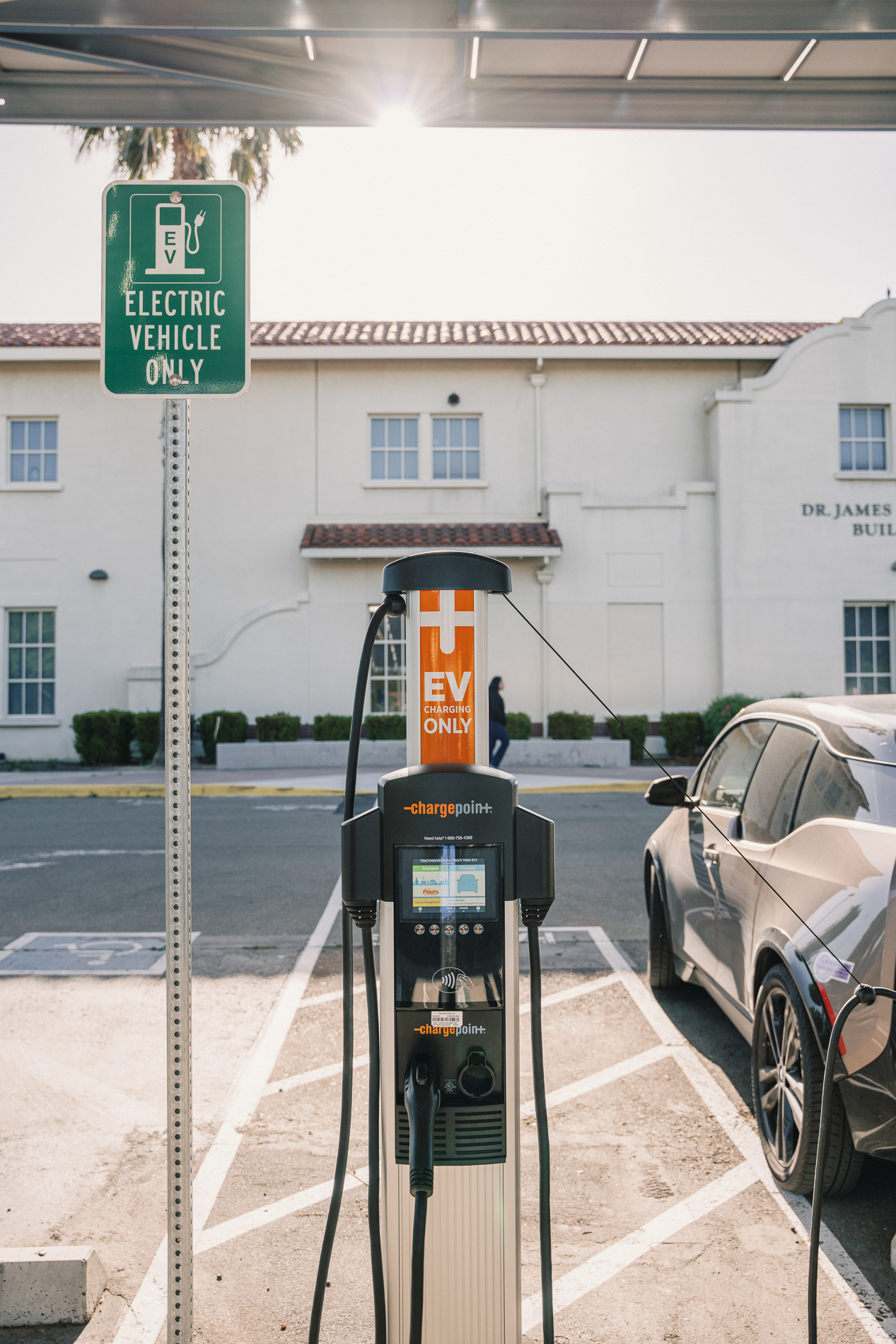
Pairing batteries with EV charging lowers costs by avoiding peak grid power and improves reliability by smoothing load spikes and supporting consistent charging performance — even in grid‑constrained or outage‑prone areas.
Pair with EV Charging Stations
Pairing batteries with EV charging lowers costs by avoiding peak grid power and improves reliability by smoothing load spikes and supporting consistent charging performance — even in grid‑constrained or outage‑prone areas.
Pair with Generators
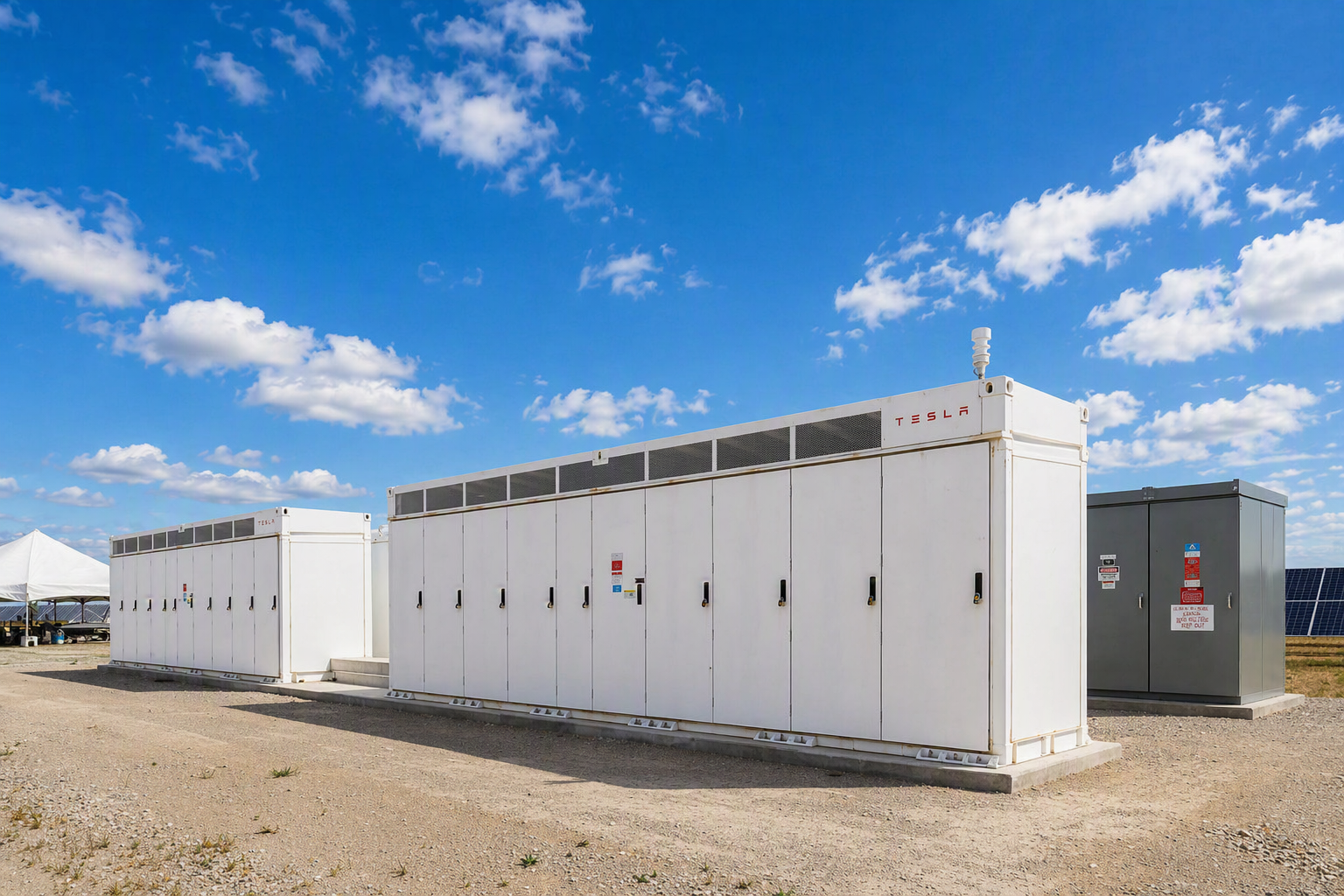
By working alongside your generator, a battery lowers fuel use, maintenance, and outage‑related risks.
Pair with Generators
By working alongside your generator, a battery lowers fuel use, maintenance, and outage‑related risks.
Pair with Microgrid Technology
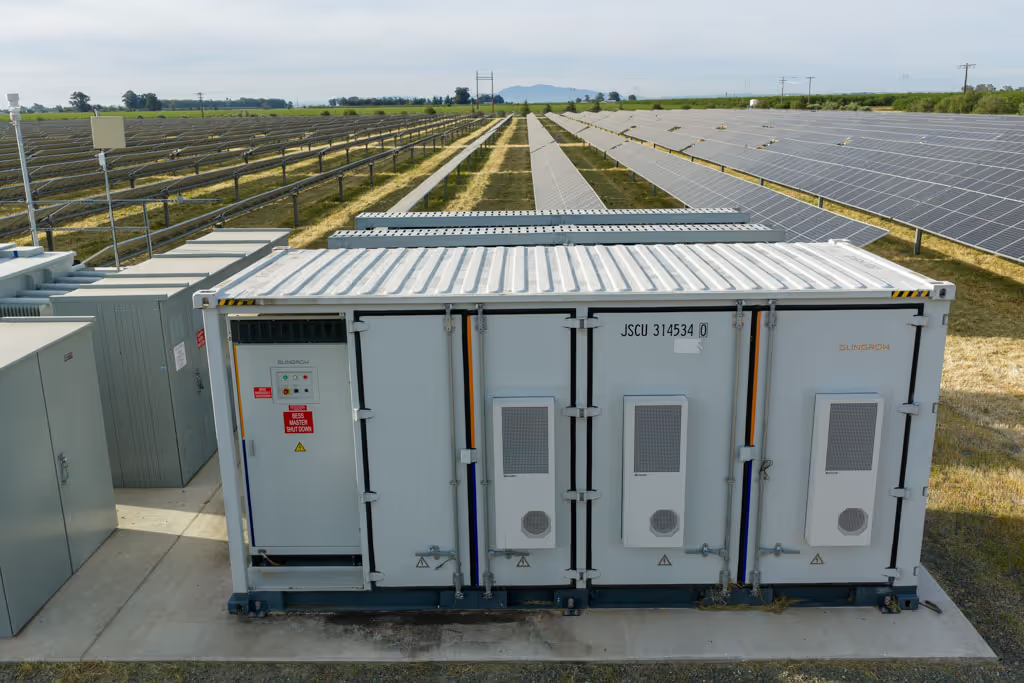
Battery storage in a microgrid configuration automatically isolates your facility from the grid during outages, ensuring seamless, uninterrupted power for critical systems.
Pair with Microgrid Technology
Battery storage in a microgrid configuration automatically isolates your facility from the grid during outages, ensuring seamless, uninterrupted power for critical systems.

Not a Manufacturer.
Not a Startup.
A Trusted Energy Partner.
Not a Startup.
A Trusted Energy Partner.
Built to last in a volatile market.

We are a stable, well-capitalized partner in a transforming industry.

We understand which products are just hype and which aren’t

We only use proven technologies with bankable warranties
Why ForeFront?
The ForeFront Difference in Energy Storage
Leading Experience
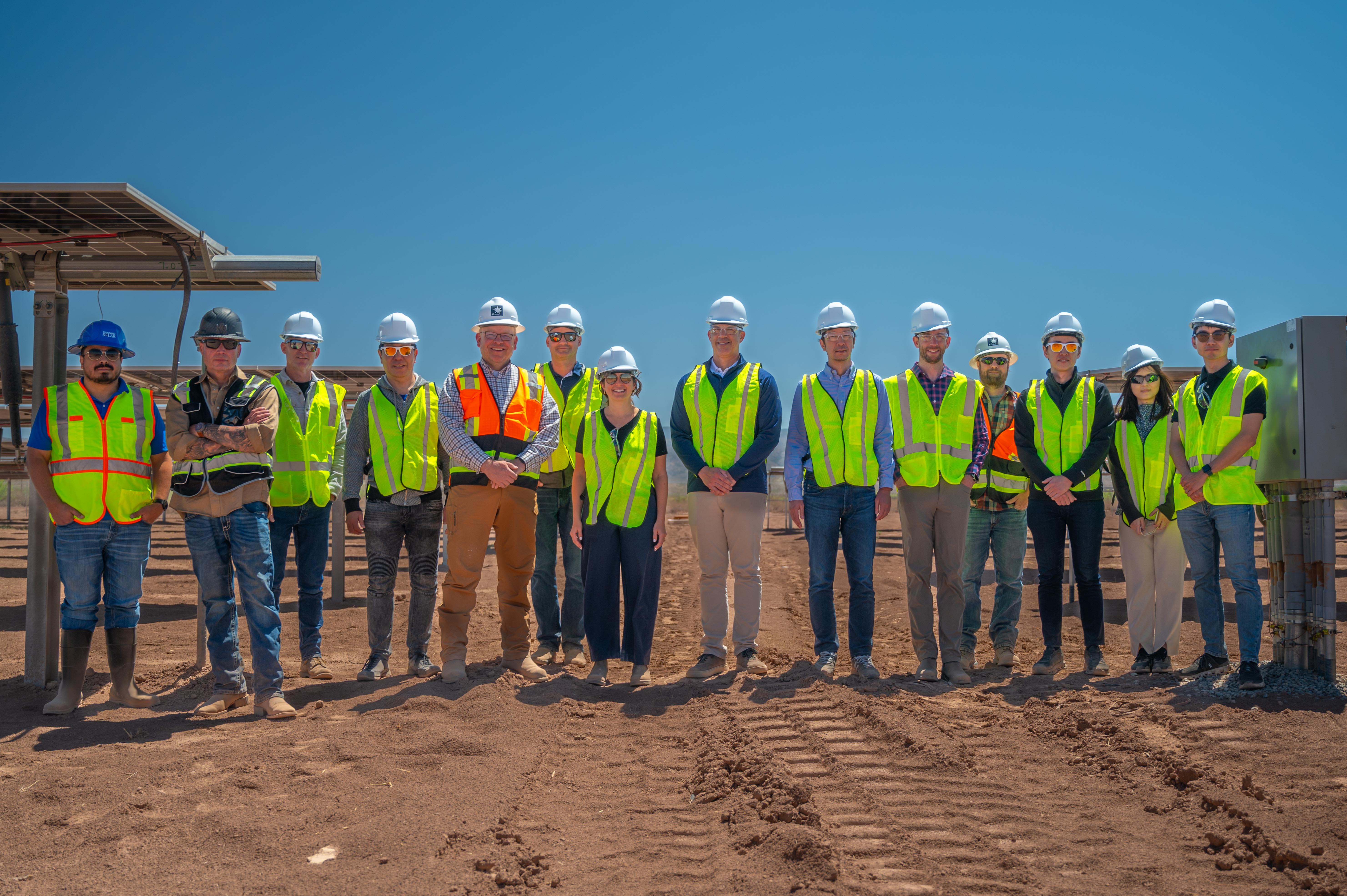
As one of California’s first commercial battery developers, we know where battery projects succeed—and where they fail. Our experience enables us to custom-design a BESS that’s right for your specific situation.
Leading Experience
As one of California’s first commercial battery developers, we know where battery projects succeed—and where they fail. Our experience enables us to custom-design a BESS that’s right for your specific situation.
Guaranteed to Perform
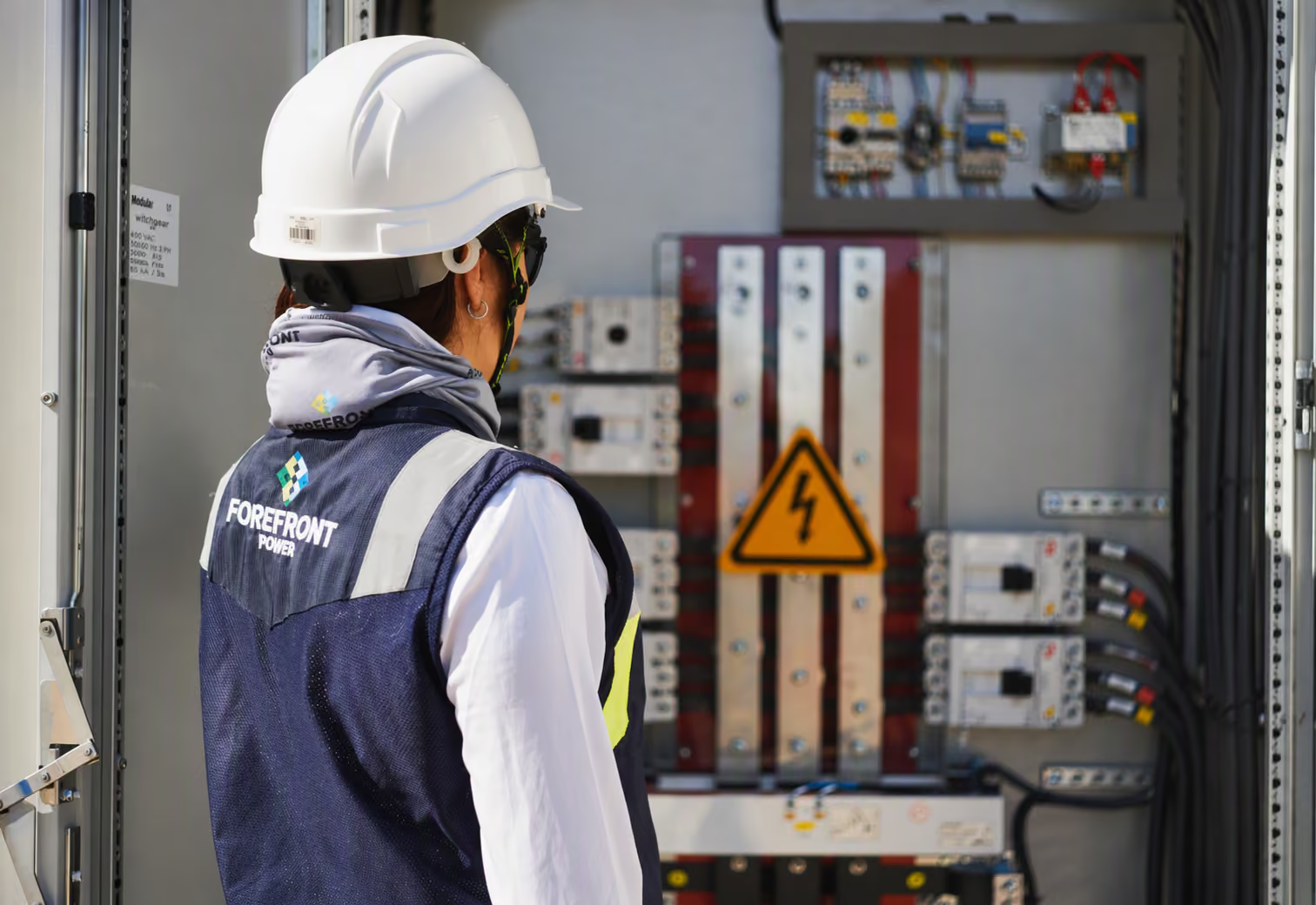
Our focus on quality shows up where it matters most: real‑world performance. We only use proven technologies with bankable warranties, and we stand behind the performance of our systems. In many cases, our projects outperform performance guarantees — giving you even greater returns.
Guaranteed to Perform
Our focus on quality shows up where it matters most: real‑world performance. We only use proven technologies with bankable warranties, and we stand behind the performance of our systems. In many cases, our projects outperform performance guarantees — giving you even greater returns.
Flexible Financing You Can Rely On
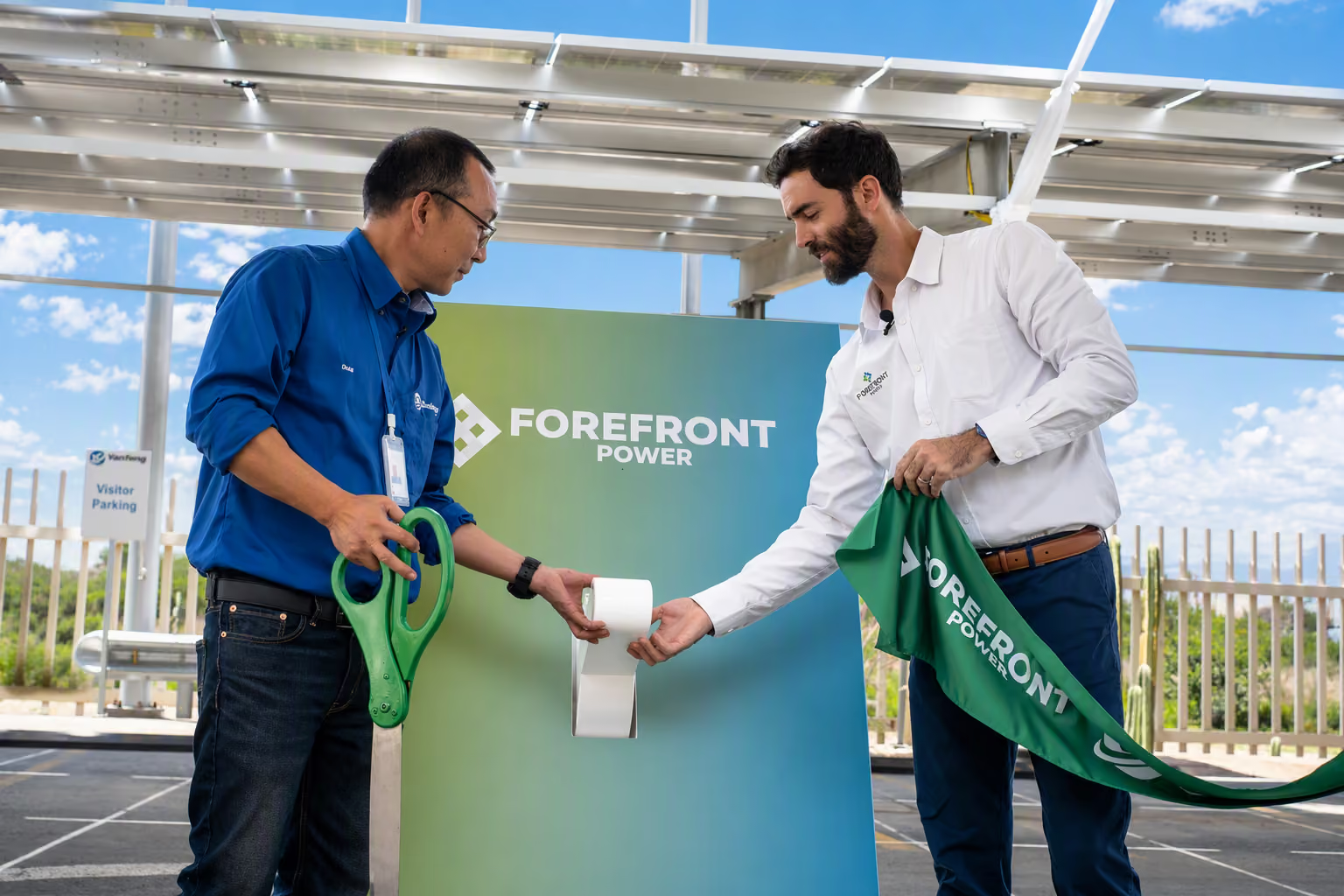
We offer some of the most flexible financing options in the market so you can choose what works best for your business. Backed by one of the strongest balance sheets in the industry, we provide the financial stability to see your project through in an uncertain world—giving you confidence it will deliver the savings you expect.
Flexible Financing You Can Rely On
We offer some of the most flexible financing options in the market so you can choose what works best for your business. Backed by one of the strongest balance sheets in the industry, we provide the financial stability to see your project through in an uncertain world—giving you confidence it will deliver the savings you expect.
One Partner for Your Entire Energy Journey
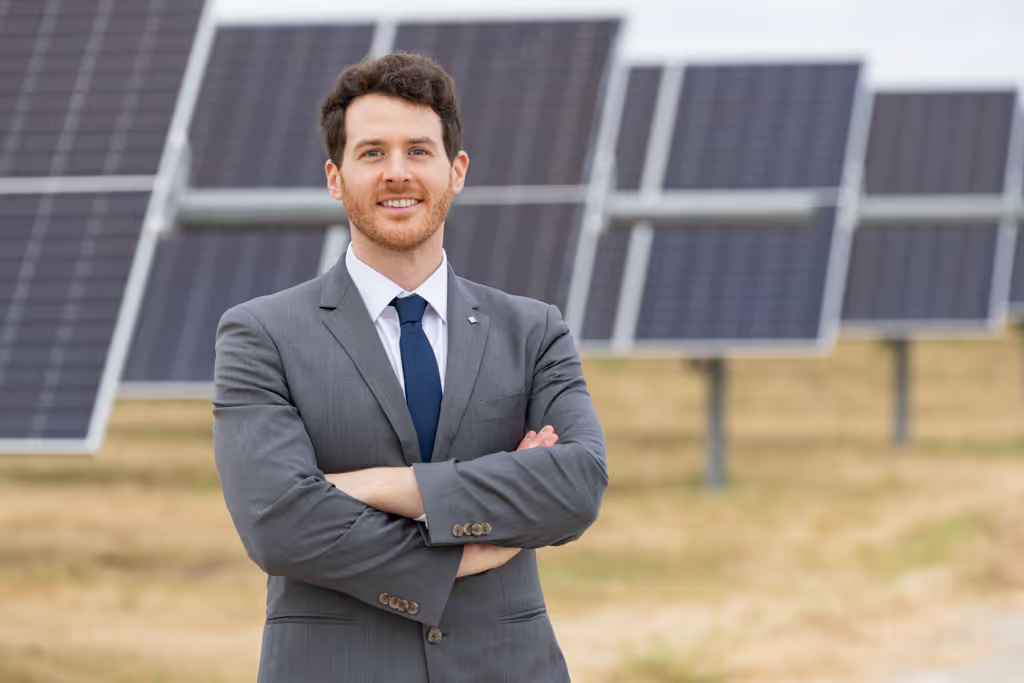
No matter where you are on your energy journey, we help move you toward your goals. Our experience spans advisory, project development, asset management, and the integration of new technologies over time. We are one partner who understands your entire strategy.
One Partner for Your Entire Energy Journey
No matter where you are on your energy journey, we help move you toward your goals. Our experience spans advisory, project development, asset management, and the integration of new technologies over time. We are one partner who understands your entire strategy.
Going the Extra Mile for Your Success
We go above and beyond to ensure your success. Every project we build includes value-added services.
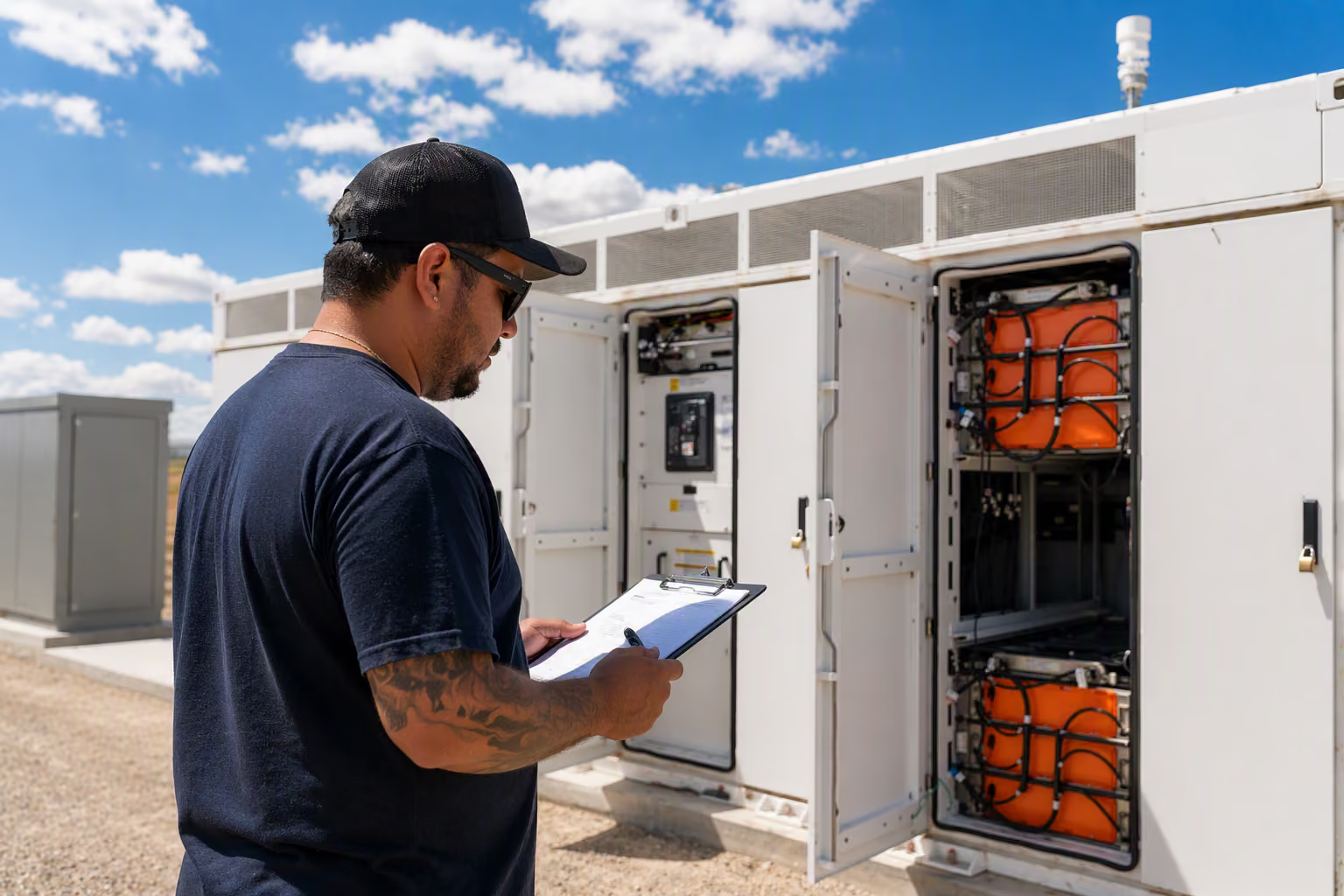
Asset Management
Ensuring reliable, safe, and optimized operation of the battery system through continuous monitoring, routine maintenance, and performance oversight to maximize system uptime and long‑term value.
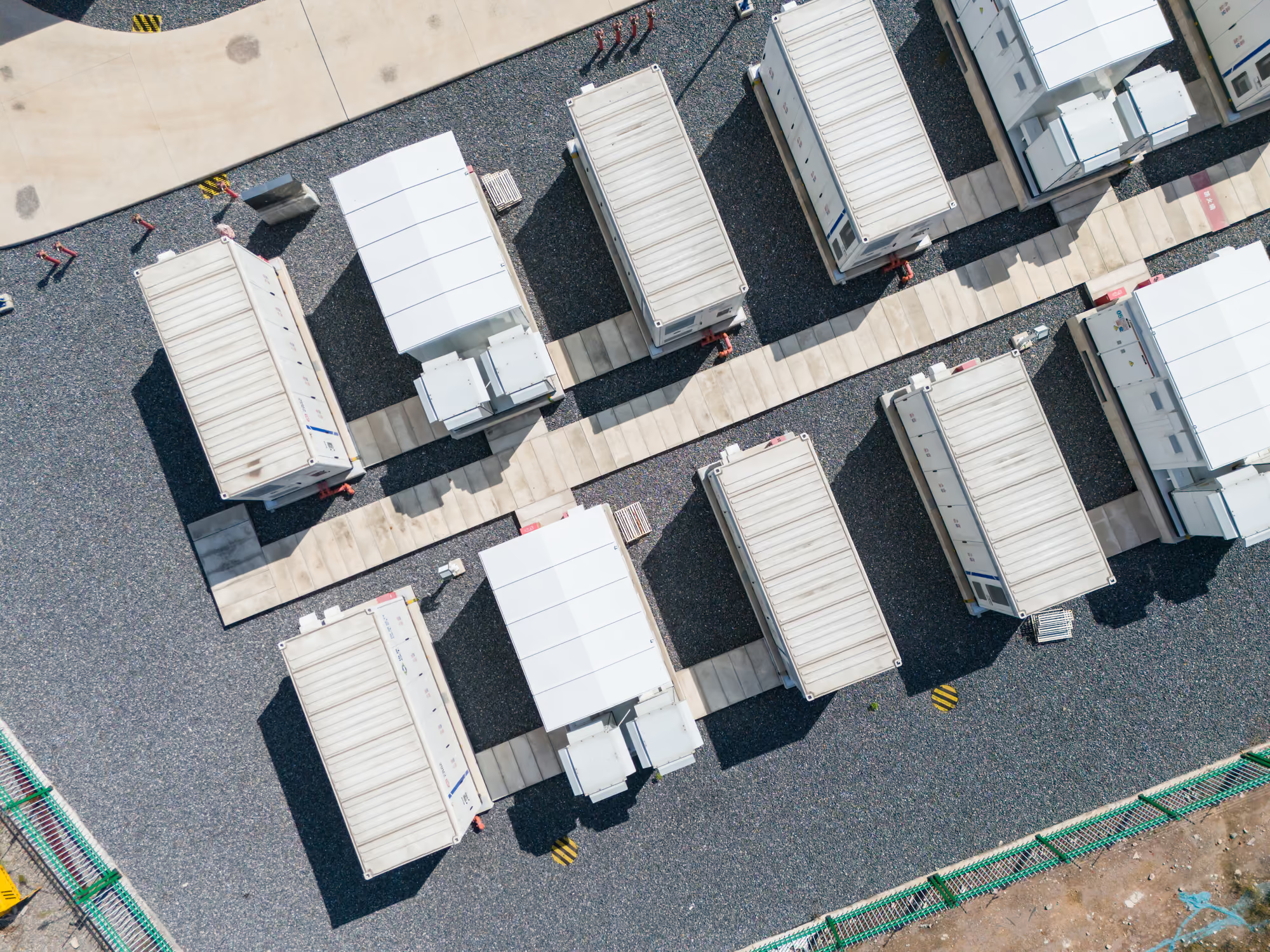
Credits & Rebate Management
Overseeing all incentive‑related requirements—such as tax credits, rebates, and program filings—to ensure your BESS meets eligibility criteria and captures all available financial benefits.

An Extension of Your Team
We work as a true partner—working side-by-side with your team to move projects forward. Our goal is to reduce your burden, simplify decision‑making, and help your project progress with confidence.
Procurement Options
How to Buy
ForeFront offers many ways to finance battery storage projects, from cash purchase to ESAs and more.
FAQs
You have questions? We have answers.
How can we determine if our facility is a good candidate for energy storage?
If your utility bill includes demand charges, time-of-use rates, or you've experienced outages that disrupted operations, you may be a good candidate for on-site energy storage. Facilities with large, consistent loads, such as manufacturing facilities, cold storage facilities, or data centers, tend to see the clearest economic case. Our team can review your load profile, costs, and goals to determine whether storage pencils out for your operation.
Do we need to have on-site solar to benefit from energy storage?
No, standalone energy storage systems can deliver real savings on their own by reducing demand charges and shifting energy usage patterns. Batteries charge during low-cost periods and discharge during peak-demand windows, directly reducing demand charges — often one of the largest line items on a commercial or industrial utility bill. Storage can also shift consumption away from high-rate periods, depending on your rate structure.
Pairing storage with solar does enhance the economics, but it's not a prerequisite. The financial case for standalone storage is well-established for facilities with the right load profile and utility rates.
Can energy storage integrate with my facility’s existing energy systems and infrastructure?
Yes. Storage is most valuable when it's designed as part of a connected energy system. We design storage to work in coordination with your existing or planned on-site resources — whether that's solar, backup generation, EV charging, or demand management systems. An integrated approach means your assets operate together toward a common goal: lower costs, greater reliability, and cleaner operations.
What are the benefits of going with an Energy Services Agreement (ESA) versus buying the energy storage system upfront with cash?
An ESA eliminates upfront capital cost and also de-risks your project over the long term. ForeFront Power owns, operates, and maintains the system, and you pay for the services it delivers. That structure shifts operational risk away from your team. If the system underperforms, that's our problem to fix, not yours.
How does ForeFront Power approach system design?
We start with your facility's actual data — load profiles, utility rate structure, operational requirements, and performance goals — before any equipment is selected. System design flows from that analysis, not the other way around. That means the system is sized and configured around what matters to your operation, whether that's demand charge reduction, backup duration, solar optimization, or some combination. Hardware selection comes last, recommended only if and when it's the right fit for the application.
ProDUcts & Services
Explore other product and service offerings
CONTACT US
Let's Get Started